


(Part 5: Caritas Wien, Vienna, Austria)
At the Prague Integration Center, we strive to continuously improve our services. We also seek inspiration abroad, where, thanks to the Erasmus+ program (2024-1-CZ01-KA122-ADU-000240058), we can visit organizations that also work with foreigners. Job shadowing gives us the opportunity to gain new ideas for developing our services, establish new partnerships, and share examples of good practice with each other.
Our international visits began in Italy at Dedalus, an organization focused on comprehensive work with youth. This was followed by Sofia, Bulgaria, and the Council of Refugee Women, which provides support primarily to refugees. Our next stop was Germany and Ausländerrat Dresden e. V., an institution with a long-standing tradition and a wide portfolio of target groups. The penultimate trip took us to Riga, specifically to the Integration and Inclusion Agency in Latvia – Live Latvia, which was established in response to the war in Ukraine. The final visit within this project took us to Austria, specifically to Vienna, where we learned about the operations of Caritas Wien.
Caritas Wien is a non-profit organization operating exclusively within the city of Vienna and is part of the broader Caritas network, which operates throughout Austria through its various member organizations. Unlike some specialized integration organizations, Caritas Wien does not focus solely on foreigners and refugees; it provides support to a wide spectrum of people in difficult life situations—including homeless individuals, women, children, seniors, and people with disabilities.
The organization employs approximately 5,000 staff members, and its activities are divided into six main pillars: emergency care and acute assistance, housing and care, asylum and integration, counseling and family, work and qualification, and in-kind donations and logistics. Caritas Wien’s funding is primarily secured through donations and contributions, with public subsidies accounting for only a smaller portion of its budget.
As part of the Erasmus+ program, we visited selected departments within the Asylum and Integration division, which play a crucial role in supporting refugees and asylum seekers.
Legal Counseling as a Key Pillar of Support
A significant stop in our program was the Legal Counseling Department, which consists of a team of approximately twenty specialists. The lawyers are divided according to key agendas, such as asylum law, migration, and social issues.
What makes their approach unique is its low-threshold nature: clients can arrive without a prior appointment, and assistance is provided on a first-come, first-served basis according to current capacity. It was highly beneficial for us to observe the team’s ability to respond flexibly to a high volume of arrivals. Handling 20 to 40 clients in a single day without prior appointments requires perfect organization and excellent teamwork. For more complex cases, which often involve long-term representation in court, clients are then scheduled for specific individual appointments.
An interesting aspect is the clinic’s language policy, which closely reflects Austrian legislation. Given that Austria requires proof of German language proficiency at the time of residency application, most consultations are conducted in German.
However, the organization is well-prepared for language barriers: it utilizes an extensive network of telephone interpreters, and an on-site Arabic interpreter is available (Arabic being the most requested language after German). This aligns with the fact that the largest client groups currently consist of refugees from Syria and Afghanistan. To accommodate this, the facility itself is designed to be accessible—all information materials and signage are consistently bilingual.
Interpreting and Intercultural Work
An interesting aspect is the clinic’s language policy, which closely reflects Austrian legislation. Given that Austria requires proof of German language proficiency at the time of residency application, most consultations are conducted in German.
However, the organization is well-prepared for language barriers: it utilizes an extensive network of telephone interpreters, and an on-site Arabic interpreter is available (Arabic being the most requested language after German). This aligns with the fact that the largest client groups currently consist of refugees from Syria and Afghanistan. To accommodate this, the facility itself is designed to be accessible—all information materials and signage are consistently bilingual.
Mobile Intervention Team and Psychosocial Support
Another key service is the Mobile Intervention Team (MIT), consisting of approximately twelve psychologists. Their primary target group includes asylees and asylum seekers in Austria. As the name suggests, the team does not only provide support on Caritas premises but also operates directly in asylum shelters and other facilities; it is, therefore, a dedicated outreach service.
Clients are offered up to twelve individual 50-minute sessions. The objective of this support is not long-term psychotherapy, but rather client stabilization, acute crisis management, and mental health support during challenging life transitions. This psychosocial support complements legal and social counseling, creating an essential foundation for clients to navigate their new environment and function effectively in a new country.
Community and Participatory Projects: Missing Link
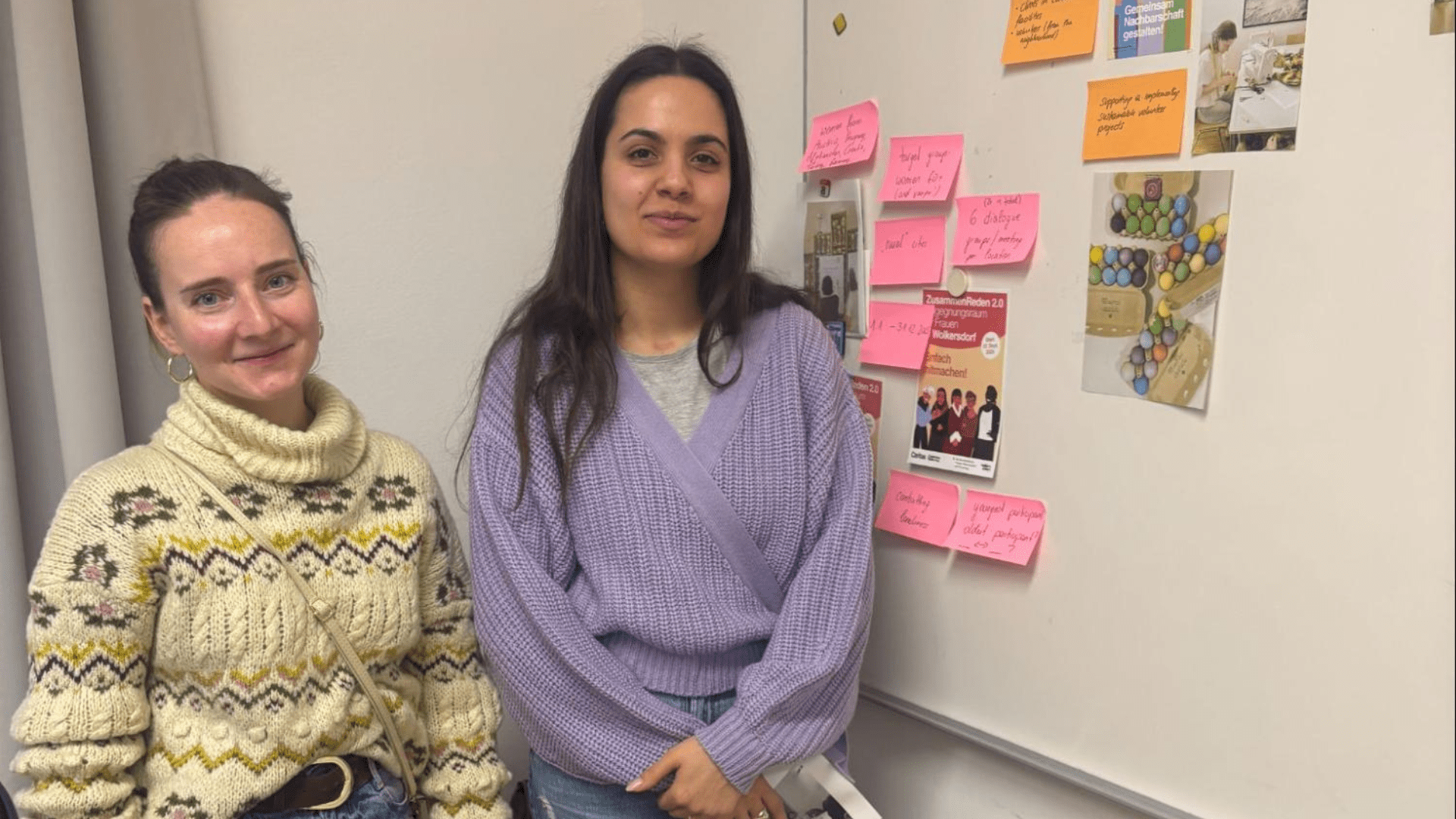
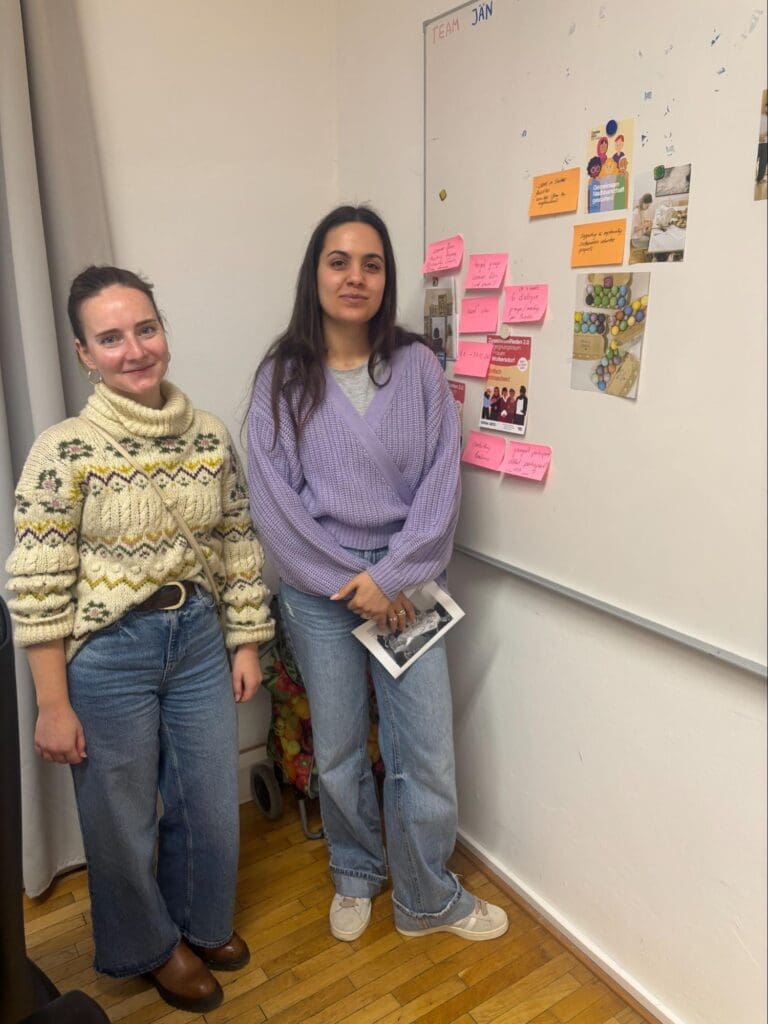
A vital part of Caritas Wien’s Asylum and Integration Department is the Missing Link project. This initiative focuses on connecting migrants with Austrian mainstream society and supporting their active involvement in public and community life. The project aims to open a dialogue, address prejudices, and strengthen social cohesion.
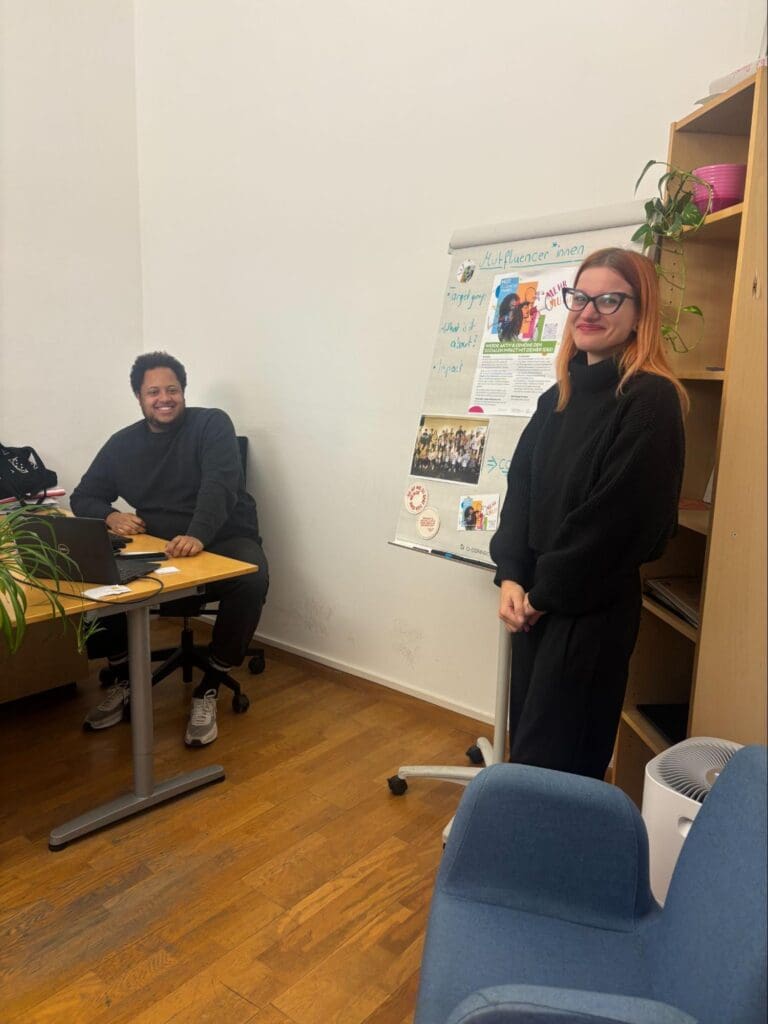
A team of approximately twenty staff members manages several activities funded by a combination of European and national resources. Key initiatives include: Mutfluencer: A project where young people from migrant or socially disadvantaged backgrounds implement their own community projects. Bridgers: Focused on preventing radicalization, promoting media literacy, and supporting democratic values among youth.
Workshops for Unaccompanied Minors: Interactive sessions dedicated to helping young foreigners navigate Austrian society, understanding their fundamental rights and obligations, and encouraging active participation in city life.
Working with Seniors: An Underserved Group
The Mobile Intervention Team also introduced a specialized program for seniors, whom Caritas identifies as an often overlooked and vulnerable group. These are predominantly lonely individuals without employment, for whom social integration is particularly challenging.
The project operates within asylum and refugee shelters, offering group activities such as physical exercise, dance, board games, and other leisure pursuits. These activities promote socialization, reinforce a sense of belonging, and significantly improve the mental well-being of the elderly.
Inspiration for the Czech Context
The experience from Caritas Wien highlights the importance of a comprehensive and multidisciplinary approach to migrant integration. A major inspiration is the seamless link between legal, social, and psychosocial support, along with high service accessibility (low barriers) and a strong emphasis on crisis stabilization.
Another noteworthy element is the systematic work with target groups that are often marginalized in integration practices, such as seniors. These insights are highly valuable for the further development of Integration Centre Prague’s services, particularly in areas of counseling accessibility, interdisciplinary cooperation, and community-oriented activities.
Conclusion
The job shadowing at Caritas Wien provided a valuable window into the operations of a large, professional organization capable of responding to a wide spectrum of needs. Their approach confirms that integration is not just a matter of legal status, but also of mental health, social bonds, and a sense of security. The lessons learned serve as an important source of inspiration for the ongoing development of integration services in the Czech Republic.
“Funded by the European Union. The views and opinions expressed are those of the authors and do not necessarily reflect the views of the European Union or the House of Foreign Cooperation. Neither the European Union nor the grant provider is responsible for them.”
