


(Part 4: Integration and Inclusion Agency in Latvia, Riga, Latvia)
At the Prague Integration Center, we strive to continuously improve our services. We also seek inspiration abroad, where, thanks to the Erasmus+ program (2024-1-CZ01-KA122-ADU-000240058), we can visit organizations that also work with foreigners. Job shadowing gives us the opportunity to gain new ideas for developing our services, establish new partnerships, and share examples of good practice with each other.
Our foreign visits began in Italy, where we got to know an organization focused on comprehensive work with young people. This was followed by Sofia, Bulgaria, and the Council of Refugee Women, an organization that provides support primarily to refugees. The next stop was Germany and Ausländerrat Dresden e. V., an institution with a long tradition and a broad portfolio of target groups.
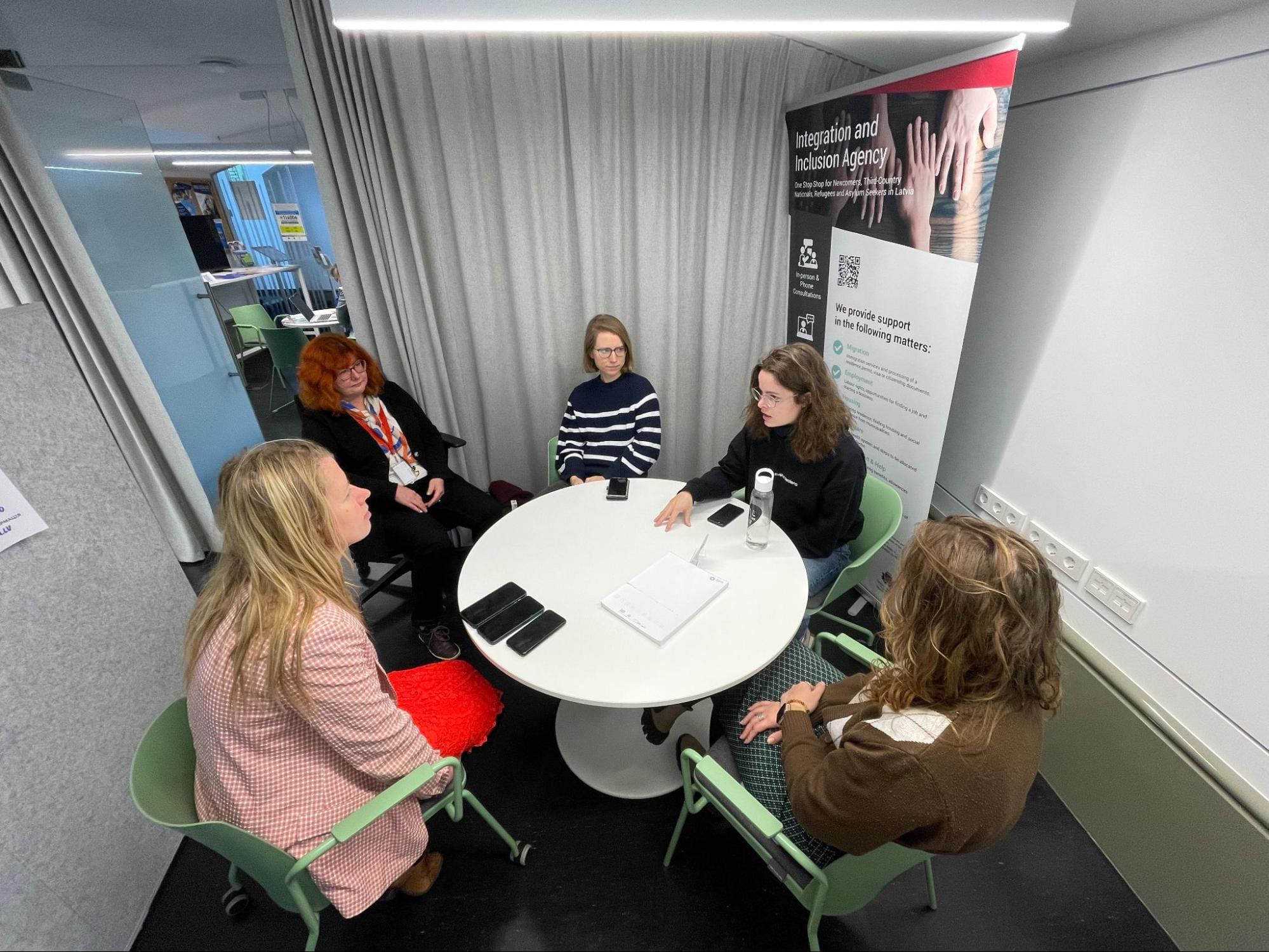
Our penultimate trip took us to Riga, specifically to the Integration and Inclusion Agency in Latvia – Live Latvia, which was established in 2022 in response to the war in Ukraine. Until then, the integration of foreigners in Latvia had not been a significant topic of public policy or practice, but the sudden influx of refugees revealed the need for systematic support, to which Live Latvia responded flexibly.
Today, the organization focuses primarily on people with temporary protection from Ukraine, but it also works with migrants from third countries, especially in the context of economic migration—for example, with clients from Russia, Kyrgyzstan, India, and Pakistan. Support is concentrated in three main areas: housing, employment or study, and social inclusion. It is in these areas that migrants in Latvia face the greatest challenges, mainly due to a lack of housing, language barriers, and limited opportunities to form social ties in a relatively closed society.
Initial Support and Service Structure
An interesting feature of the work of the Integration and Inclusion Agency in Latvia is its clearly structured support system and division of roles among individual employees. Initial contact with clients is handled by Client Consultants, who provide brief, introductory consultations—most often by phone, via WhatsApp, or in person. These consultations focus primarily on basic information in the areas of residence permits, employment, healthcare, social support, and education, and usually last only a few minutes. The aim is to quickly guide the client and ensure the availability of information without unnecessary administrative barriers.
More complex and long-term cases are then taken over by Change Agents, who conclude a cooperation agreement with clients and jointly create an individual plan for social and economic integration. The cooperation focuses mainly on housing, employment, education, language development, and orientation in the health and social system. The support is long-term and flexible, tailored to the client’s current needs. As in the Czech context, the goal is not to solve the situation for the client, but to strengthen their competencies and ability to independently navigate the system and gradually achieve social and economic independence.
Legal advice is provided through a combination of internal and external resources – approximately 70% of cases are handled by the organization’s own staff, while more complex issues are referred to external lawyers, who provide written outputs that can be used for further work with the client. All consultations, including telephone and online contacts, are recorded in an internal database, which enables continuity of support, information sharing within the team, and transparent case management.
A significant difference compared to the Czech Republic is the fact that the position of Change Agent is not a regulated profession in Latvia. Employees do not need to have formal education in social work; the emphasis is primarily on practical experience in the field of migration, education, or employment. Approximately ten new clients join the program each month, with whom intensive cooperation is established.
State support also includes a financial contribution towards accommodation, which is provided for the first two months after arrival in the country. This assistance is intended to help stabilize the situation of new arrivals. However, once this assistance has been exhausted, clients are expected to find housing on their own, which is very difficult in the current situation—especially for people with language barriers, limited financial resources, and minimal social ties. Housing is thus proving to be one of the greatest challenges of integration work in Latvia.
Intercultural work and interpreting
Latvian is one of the main barriers to integration. Knowledge of the language is required for most jobs and is also key to obtaining a long-term residence permit. The host organization responds to this by providing access to language courses and basic language support; however, the language barrier remains a significant obstacle for many clients.
However, clients can use interpreting services, which are provided externally through a coordinator who selects providers based on price. The organization also emphasizes the availability of document translations—free of charge for clients if the translation is necessary for them to remain in Latvia, otherwise the translation is paid for.
Community activities
In addition to individual consultations and practical support, Live Latvia also organizes community and cultural events that promote social integration. The organization’s clients and employees meet outside of formal settings, which strengthens their sense of belonging and helps build social ties. Examples include joint outdoor events and volunteer activities, such as cleaning up the zoo, which also promote the involvement of migrants in the local community.
Barriers and political contexts of integration
The current political situation further complicates matters. The Latvian government is gradually reducing financial support for Ukrainian refugees and integration measures, shifting funds primarily to defense and security. These changes are directly reflected in the work of the non-profit sector—projects are time-limited, and organizations must continuously adjust the scope of their services according to available funding. In practice, this means that the existing integration project of the visited organization will be terminated in the near future and its activities will be limited mainly to the implementation of courses. Long-term individual work with clients, which is key to achieving social and economic self-sufficiency, will thus be significantly reduced.
The organization works closely with five ministries, with the Ministry of Culture coordinating the agenda for the integration of foreigners. A foundation has been established to distribute funds to support non-profit organizations and projects focused on integration.
Conclusion
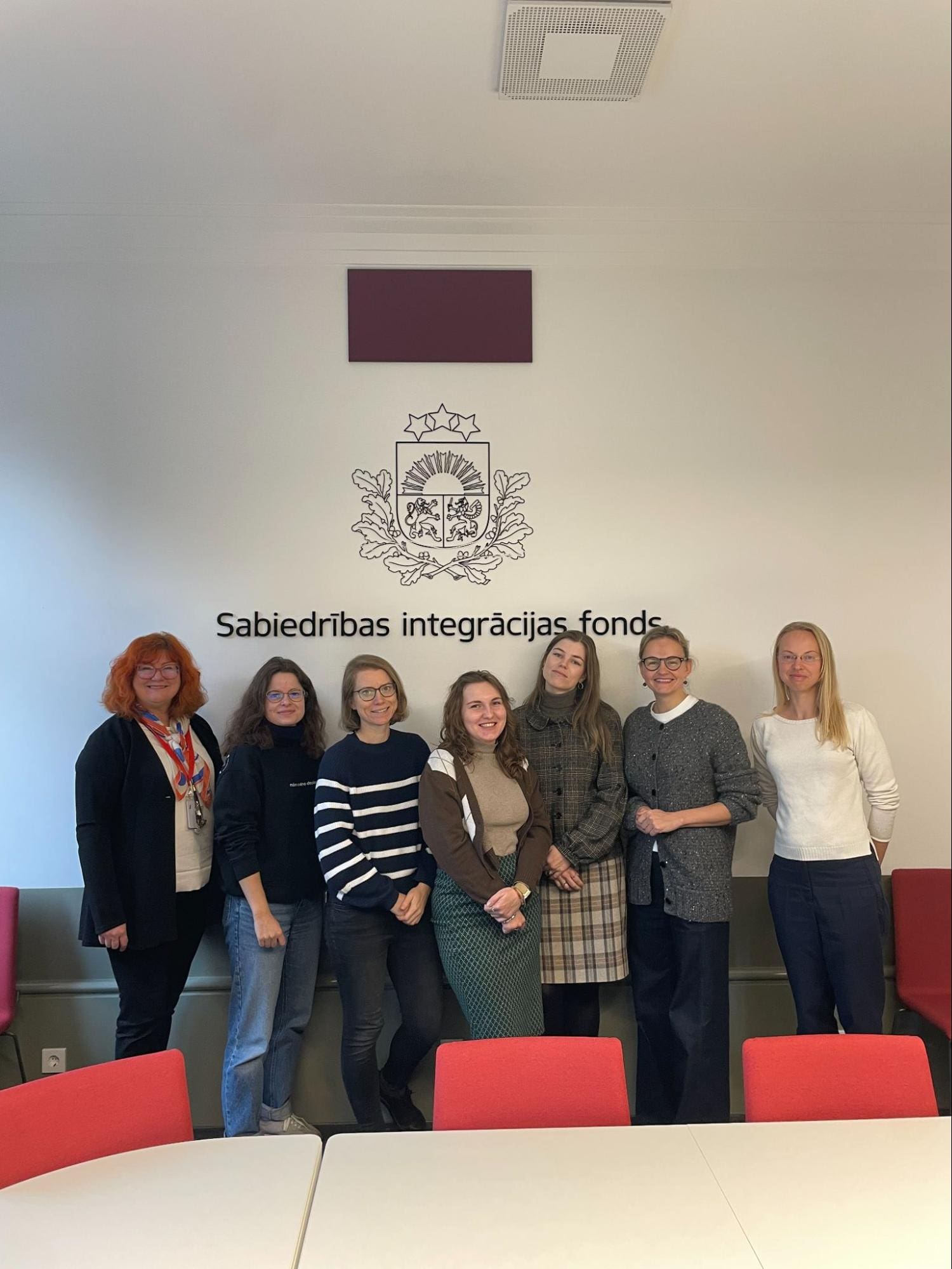
Job shadowing at Live Latvia provided valuable insight into a flexible, practically oriented organization that builds on an individual approach and long-term cooperation with clients. We find inspiration in particular in the systematic approach to the social and economic independence of clients, links with government structures, and the ability to respond quickly to the changing needs of migrants. Interestingly, the organization was only established in 2022 in response to the refugee crisis caused by the war in Ukraine and quickly managed to set up a support system. Nevertheless, it faces challenges that have a broader European context—limited resources and increasing demands from the state. These experiences can also enrich our work at the Prague Integration Center and contribute to the further development of services for foreigners in the Czech environment.
We would like to thank the organization for their warm welcome and many interesting ideas, and we wish them every success in their activities!
“Funded by the European Union. The views and opinions expressed are those of the authors and do not necessarily reflect the views of the European Union or the House of Foreign Cooperation. Neither the European Union nor the grant provider is responsible for them.”
